

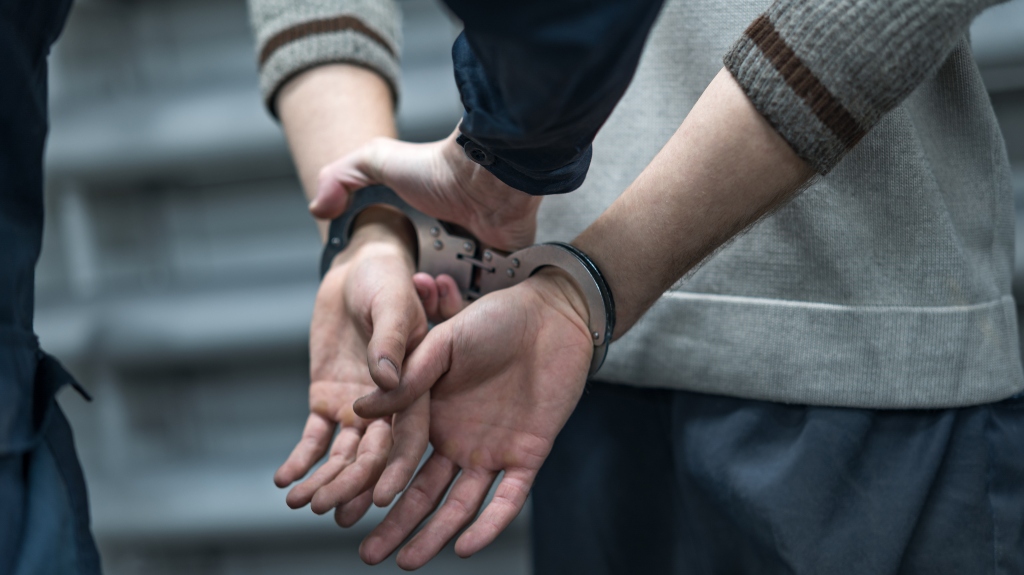
Saying no to a breath test at a station is a crime in Minnesota. It does not make a DWI case disappear. In most cases, it adds a criminal charge and a longer license suspension than a failed test would have brought. Since August 2025, the license system remembers your past twice as long.
Minnesota Treats Refusal as Its Own Crime
Every driver in the state is considered to have agreed to chemical testing under Minnesota’s implied consent law. When an officer with probable cause requests an evidentiary breath test, a short advisory informs you that Minnesota law requires this test, that refusal is a crime, and that you can call a lawyer if the call does not unreasonably delay the testing.
The refusal itself is charged under Minn. Stat. § 169A.20, subd. 2. A first refusal with no aggravating factors is a third-degree DWI, which is a gross misdemeanor carrying up to 364 days in jail. The consequences get worse from there:
- If there has been a prior impaired driving incident within the past ten years or if a child under the age of 16 was in the vehicle, the charge could be raised to second-degree DWI.
- If three or more incidents have occurred within the past decade, the charge becomes a felony.
- Additionally, your refusal can be used against you as evidence in court during the trial for the underlying DWI charge.
Not Every “No” Counts the Same Way
The handheld device on the roadside is a preliminary screening test. Refusing to use it is not a crime, although it may give the officer grounds to request an evidentiary test at a police station.
Refusal is not limited to just saying the word.
- Failing to provide two adequate breath samples in the correct order counts as a refusal under the law.
- Stretching out a phone call with an attorney well past a reasonable amount of time can also be considered a refusal.
The 2025 Law Change Drivers Feel in 2026
The biggest update is on the license side. The 2025 Minnesota Session Laws, Chapter 29, took effect on August 1st, 2025, and moved the DWI revocation period into a single statute. Minn. Stat. § 171.178 doubled the lookback period for previous incidents from 10 years to 20 years.
Here is what a license suspension means for you now:
- If there are no prior incidents in the last 20 years, your license will be suspended for at least one year. This is compared to a minimum 90-day suspension for many first-time test failures.
- If you have one prior incident in the last 20 years, there is no fixed end date for your suspension. Your license will remain suspended until you complete licensed substance use disorder treatment and participate in the ignition interlock program for at least two years.
- For two or more prior incidents, the suspension will last at least six years with the interlock. If there are three or more incidents, it will be ten years.
You Have 60 Days to Fight the Revocation
The license revocation is a civil case separate from the criminal charge. Under Minn. Stat. § 169A.53, you have 60 days after receiving notice to petition for judicial review. Filing doesn’t pause the revocation.
At that hearing, the court will consider whether the officer had probable cause, whether the arrest was lawful, whether the advice was read correctly, and whether the defendant actually refused. The law also recognizes a positive defense when the refusal was based on reasonable grounds. If the defendant misses the deadline, most of these arguments will be gone.
Talk to a Defense Attorney Before the 60-Day Window Closes
A refusal charge moves on two tracks at once, and decisions on one affect the other. At 29th & Law, PC, we approach these cases as problems to solve, not arguments to win for their own sake. Sometimes that means challenging the stop in court. More often, it means a practical, cost-effective path that protects your license and your record.
If you are arrested for refusing to take a breath test, contact our office with a notice of revocation while every deadline is still open.